 Veterinary Emergency & Urgent Care
 I Have An Emergency
Wildfire Smoke and Pets: How to Protect Dogs, Cats, Birds & More
When wildfire smoke rolls into Minnesota, it’s easy to focus on how it affects people. But our pets are breathing the exact same air we are—and in some cases, they’re even more vulnerable. If the air isn’t safe for you, it isn’t safe for your pet.
Here’s what every pet owner should know about wildfire smoke and pets, which pets are most at risk, and how to keep your animal family members safe until the air clears.

Why wildfire smoke is dangerous
The biggest concern with wildfire smoke isn’t actually the smell—it’s particulate matter (PM). Particulate matter consists of microscopic bits of soot, ash, dust, and other debris suspended in the air. Air quality reports often measure these particles as PM2.5, PM5, and PM10. The number refers to the maximum size of the particles in micrometers.
The smaller the particle, the deeper it can travel into the respiratory system. Particles 5 micrometers or smaller can reach the lungs in both mammals and birds, where they interfere with normal oxygen exchange and trigger inflammation.
Wildfire smoke also increases levels of ozone and nitrogen oxides, especially during hot weather. Together, smoke and heat can place even more stress on the lungs and cardiovascular system.
Which pets are most at risk?
While any pet can be affected by poor air quality, some animals are especially vulnerable.
Cats with asthma
Cats with asthma already have inflamed, sensitive airways. Smoke can quickly trigger coughing, wheezing, and respiratory distress.
Dogs with airway disease
Dogs with conditions such as laryngeal paralysis or a collapsing trachea may struggle to breathe even under normal circumstances. Wildfire smoke can make those breathing difficulties significantly worse.
Pets with heart disease
Heart disease doesn’t directly affect the lungs—but it does reduce the body’s ability to deliver oxygen.
When oxygen levels are lower because of smoke, a healthy heart can compensate by pumping harder. A diseased heart often can’t keep up, making pets with cardiovascular disease much more susceptible to illness during periods of poor air quality.
Birds: The most sensitive pets of all
Among companion animals, birds are especially vulnerable to wildfire smoke. Birds have an incredibly efficient respiratory system designed to support flight, which requires enormous amounts of oxygen. Their lungs and air sacs continuously move air through the respiratory system, allowing rapid oxygen exchange.
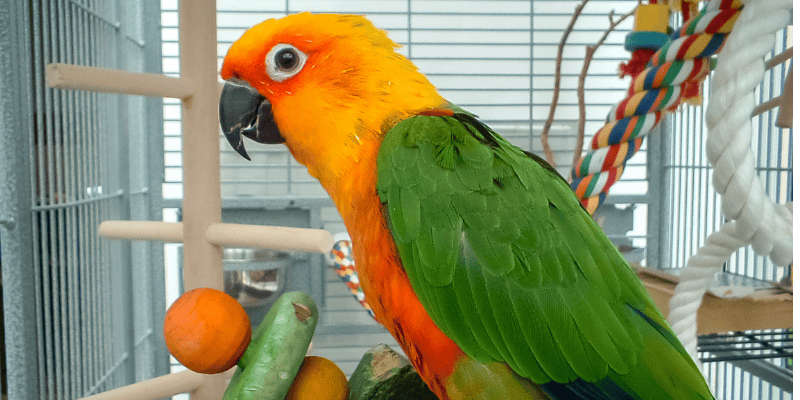
That efficiency becomes a disadvantage when the air contains particulate matter. Tiny particles can quickly reach the lungs, interfere with oxygen exchange, and lead to sudden respiratory distress—or even death. If you’ve heard the phrase “canary in a coal mine,” there’s a reason behind it. Miners once carried canaries underground because the birds’ highly sensitive respiratory systems would show signs of dangerous air conditions before humans’ lungs did. Wildfire smoke poses a similar risk.
Reptiles
Unlike mammals and birds, reptiles vary widely in their ability to tolerate low oxygen levels. Some turtles, for example, can survive an entire winter beneath the ice with very little oxygen available. That doesn’t mean wildfire smoke is harmless for reptiles, but their response may differ from that of dogs, cats, or birds.
How to keep your pets safe during smoky conditions
The simplest rule about wildfire smoke and pets is also the most important: we all breathe the same air. If it’s not safe for you to be outside, it’s not safe for your pet either.
During days when the Air Quality Index (AQI) reaches unhealthy levels:
-Keep pets indoors as much as possible.
-Skip long walks, hikes, runs, and outdoor playtime.
-Only take dogs outside for brief bathroom breaks.
-Bring outdoor pets inside whenever possible.
One common mistake is assuming that if you’re protected, your pet is too. For example, if you’re wearing an N95 respirator outside because the air quality is poor, your dog has no such protection. If you need a mask to breathe safely outdoors, your pet shouldn’t be spending unnecessary time outside.
Traveling with your pet
If you need to bring your pet to the veterinarian or another destination: keep outdoor exposure as brief as possible. Once you’re in the car, set the ventilation system to recirculate so you’re not continually pulling smoky outdoor air into the vehicle.
Some owners wonder whether covering a pet carrier with a blanket helps filter smoke. Unfortunately, it doesn’t. In fact, covering the carrier can reduce airflow and increase the risk of overheating without protecting your pet from fine smoke particles.
Keeping bored pets entertained indoors
A few days inside can leave even the most relaxed pet feeling restless. Consider enriching their environment with activities such as:
-New toys or puzzle toys
-Food puzzles or foraging feeders
-Indoor training sessions
-Doggy daycare (if indoor air quality there is good)
-Safe indoor play opportunities
-Rabbit “hoppy hours” or other supervised indoor enrichment for rabbits
Mental stimulation can go a long way toward replacing outdoor exercise until conditions improve.

Watch for signs of smoke-related illness
Contact your veterinarian promptly if your pet develops:
-Coughing
-Wheezing
-Increased respiratory effort
-Rapid breathing
-Open-mouth breathing (especially in cats)
-Lethargy
-Exercise intolerance
-Blue or gray gums
-Collapse
If your pet is having difficulty breathing, seek emergency veterinary care immediately.
Don’t forget about your own health
Keeping yourself healthy also helps you care for your pets. If you have asthma, heart disease, COPD, or another condition that increases your risk during wildfire smoke events:
-Wear a properly fitted N95, KN95, or KF94 respirator if you must be outdoors.
-Make sure the respirator seals well against your face.
-Replace it according to the manufacturer’s recommendations (typically after 4–8 hours of use or sooner if it becomes dirty or damp).
-Cloth masks and loose surgical masks do not filter the fine particles found in wildfire smoke.
-Monitor air quality
Smoke conditions can change quickly throughout the day
Monitor the Air Quality Index (AQI) using a trusted resource such as the EPA’s AirNow website or mobile app. If indoor air quality also becomes poor, consider using an appropriately sized air purifier or filtration system to improve the air inside your home.
The bottom line
Wildfire smoke is more than an inconvenience—it can be dangerous for both people and pets. Animals with asthma, airway disease, heart disease, and especially birds are at the highest risk, but any pet can be affected when air quality deteriorates. The good news is that the best protection is also the simplest: stay indoors, limit outdoor exposure, monitor the AQI, and seek veterinary care promptly if your pet shows signs of respiratory distress.
At Animal Emergency & Referral Center of Minnesota, we’re here 24/7 if your pet experiences breathing difficulties or another emergency related to poor air quality. When in doubt, don’t wait—our emergency team is ready to help!

Related Reading:
How to Know If Your Pet Is Experiencing Respiratory Distress