
 Veterinary Emergency & Urgent Care
 I Have An Emergency
Lilies and Kitties: Keeping Your Cat Safe This Spring
As Mother’s Day and the spring season roll around, you may be tempted to buy that beautiful bouquet of lilies from the grocery store. If you have a cat at home, think twice!
Which lilies are toxic to my cat?
Specifically, lilies that are part of the Lilium (true lilies) and Hemerocallis (day lilies) families are toxic to cats. The list below includes common flowers that fall into those categories:
- Asiatic lily – including hybrids (Lilium asiatica)
- Daylily (Hemerocallis species)
- Easter lily (Lilium longiflorum)
- Japanese Show lily (Lilium speciosum)
- Oriental lily
- Roselily (pollen-free hybrid of Oriental lily)
- Rubrum lily (Lilium speciosum var. rubrum)
- Stargazer lily (Lilium ‘Stargazer’- a hybrid)
- Tiger lily (Lilium tigrinum or lancifolium)
- Wood lily (Lilium philadelphicum or umbellatum)
Which parts of the plant are toxic?
If a cat eats any part of the lily plant (including leaves, flowers, pollen or even water from the vase) kidney failure and death can result. Even eating one leaf, sniffing pollen, or drinking water from a lily’s vase can be fatal for cats. Lily ingestion is considered a true veterinary medical emergency and requires immediate care.
How is lily ingestion treated?
Initial treatment usually consists of decontamination: bathing to remove pollen, inducing vomiting to remove stomach contents and administering charcoal to bind toxins. We recommend that cats who have ingested lilies be hospitalized for at least 48 to 72 hours for aggressive fluid therapy and monitoring of kidney values. Some studies have shown that aggressive and prompt treatment has a 90% survival rate. However, if treatment is delayed by even 12-18 hours post-ingestion, permanent kidney damage and even kidney failure may result.

Other plants have the name lily, but are not considered true lilies, such as lily-of-the-valley, peace lily, and calia lily. These are not toxic to cats’ kidneys but can still lead to problems if your cat were to ingest them.
Cats are the only species with known toxicities to lilies, though when dogs eat lilies, they can experience GI upset.
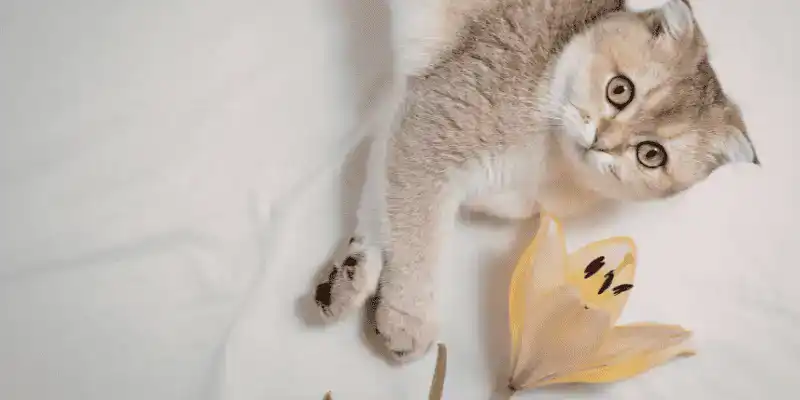
If you have a cat, please ensure that this spring season, lilies don’t sneak into your house via bouquets or flower arrangements.
Pet Poison Helpline has a great resource on lilies and cats- https://www.petpoisonhelpline.com/veterinarians/free-resources-clinic-clients/no-lilies-for-kitties/
If you suspect your cat ate a lily, seek immediate veterinary attention. Animal Emergency & Referral Center of Minnesota is open 24/7 in Oakdale and St. Paul, Minnesota and can be reached at 651-501-3766.